California Natural Wonders
California's National Parks: Nature at Its Most Magnificent
California contains nine national parks — more than any other state in the union — spanning ancient forests, granite peaks, volcanic deserts, oceanic islands, and redwood cathedrals within a single Golden State journey.
Explore the ParksCalifornia National Parks Guide 2026
From Yosemite’s granite walls to Death Valley’s extremes, Sequoia’s giant trees, Joshua Tree’s desert sculpture, and the coastal wildness of Redwood and the Channel Islands, this guide helps you choose parks, plan seasons, and build a realistic itinerary across California’s unmatched protected landscapes.
California's National Park Legacy
California’s relationship with national parks is foundational to the concept itself. Yosemite Valley was the first piece of land set aside by the federal government specifically for public recreation and preservation, in 1864 — a decision that planted the seed from which the entire national park system grew.
The nine national parks within California’s borders collectively represent one of the most extraordinary concentrations of protected natural landscapes anywhere on Earth. From the Pacific coastline to the Sierra Nevada, from the Mojave Desert to the northern rainforests, the range of ecosystems and geological formations preserved within these parks is simply staggering.
John Muir, the Scottish-American naturalist who became California’s first great wilderness advocate, spent much of his career exploring and writing about California’s wild places — particularly the Sierra Nevada range he called the “Range of Light.” Muir’s passionate advocacy, expressed through his writings and through his founding of the Sierra Club in 1892, was instrumental in persuading Congress to establish Yosemite as a national park in 1890. The tradition of environmental advocacy that Muir established has continued in California for 130 years, and the state’s exceptional natural heritage is the living proof of what that advocacy has protected.
Yosemite National Park: The Crown Jewel
Yosemite National Park is one of the great natural wonders of the world — a place of such overwhelming scale and beauty that first-time visitors consistently report being moved to tears at their first sight of Yosemite Valley. The park encompasses 1,169 square miles in the Sierra Nevada mountains of central California, and within those boundaries contains landscapes of extraordinary geological and biological diversity.
The glacially carved Yosemite Valley itself — seven miles long, roughly a mile wide, and walled on both sides by granite cliffs rising up to 4,000 feet from the valley floor — is the park’s most visited section. From the Tunnel View lookout at the valley’s eastern entrance, visitors see one of the most compositionally perfect landscapes on Earth: El Capitan (the largest exposed granite monolith in the world at 3,000 feet) on the left, Half Dome (the park’s iconic split-rock formation) at the center distance, and Bridalveil Fall cascading 620 feet on the right, all framed by the valley’s meadows and the Merced River reflecting the scene.
Yosemite’s waterfalls are among its most dramatic seasonal features. Yosemite Falls — the tallest waterfall in North America at 2,425 feet total — flows most powerfully in May and June when snowmelt is at its peak. Bridalveil Fall flows year-round. Vernal Fall (318 feet) and Nevada Fall (594 feet) on the Mist Trail east of the valley offer thrilling encounters with spray and power during the spring and early summer.
El Capitan holds a special place in the hearts of rock climbers worldwide. The 3,000-foot vertical granite face was first climbed in 1958, when Warren Harding and his team took 47 days to complete the first ascent using siege tactics. Today, elite climbers complete routes on El Cap in a matter of hours; in 2017, Alex Honnold free-soloed the Freerider route (approximately 3,000 feet of technical climbing without ropes or protection) in 3 hours and 56 minutes — an achievement that the New York Times called “the greatest athletic achievement in history.” A pair of binoculars is useful for watching climbers on El Cap’s wall during summer days.
The Mariposa Grove, in the park’s southwestern corner, contains approximately 500 mature giant sequoias, including the famous Grizzly Giant — at roughly 2,700 years old, one of the oldest living things on Earth. The grove has been restored to its natural state over the past decade after decades of road and infrastructure impacts, and is now accessible only on foot or shuttle, ensuring a quiet and reverential experience among the ancient trees.
Must-See Viewpoints
Tunnel View, Glacier Point (seasonal road access), Valley View, and the meadows along the Merced River for classic valley perspectives.
Signature Trails
Mist Trail to Vernal and Nevada Falls, valley floor loops, and longer routes toward Half Dome when permits and conditions allow.
Seasonal Power
May–June peak waterfall flow; summer climbing spectacle on El Cap; autumn color and quieter valley days; winter snow and icy roads.
Giant Sequoias
Walk among roughly 500 mature sequoias in Mariposa Grove, including the ~2,700-year-old Grizzly Giant, reached on foot or by shuttle.
Sequoia & Kings Canyon National Parks
Administered jointly, Sequoia and Kings Canyon protect a vast stretch of the southern Sierra Nevada where the world’s largest trees rise above deep glacial canyons, alpine lakes, and remote high-country wilderness. Together they showcase the vertical drama of California’s mountains — from foothill oak woodlands to the crest of the High Sierra.
Sequoia National Park is home to the General Sherman Tree, the largest living tree on Earth by volume. Nearby Giant Forest holds one of the densest concentrations of giant sequoias anywhere, with accessible trails that let visitors walk among trunks so massive they rewrite any sense of ordinary forest scale. The parks also guard Mount Whitney’s western approaches — at 14,505 feet, the highest peak in the contiguous United States.
Kings Canyon plunges into one of North America’s deepest canyons, with the South Fork of the Kings River carving granite walls and forested depths that feel far removed from busy overlooks. Scenic drives, grove walks, canyon viewpoints, and wilderness trailheads make these twin parks ideal for travelers who want both iconic sequoia encounters and serious mountain scenery in one linked destination.
Death Valley National Park: Beautiful Extremes
Death Valley is a park of beautiful extremes — the hottest, driest, and lowest national park in the United States, yet filled with color, silence, and surprising delicacy. Badwater Basin sits 282 feet below sea level, a vast salt flat shimmering under desert light, while surrounding mountains rise thousands of feet above the valley floor.
Travelers come for Mesquite Flat Sand Dunes, Artist’s Palette’s mineral-stained hills, Zabriskie Point’s eroded badlands, and sunrise or sunset that turns the entire basin into bands of gold, rose, and violet. Despite its name and reputation for heat, Death Valley rewards careful winter and shoulder-season visits with empty horizons, star-filled night skies, and some of the most otherworldly geology in California.
Planning is essential: carry abundant water, watch temperatures, fuel up before entering remote stretches, and respect the desert’s distances. When visited wisely, Death Valley reveals not emptiness but an intricate landscape of salt, sand, stone, and sky.
Joshua Tree National Park: Where Two Deserts Meet
Joshua Tree National Park is where the Mojave and Colorado deserts meet — a landscape of twisted Joshua trees, monzogranite boulder piles, wide desert washes, and some of the most photogenic sunsets in Southern California. The park’s surreal silhouettes have made it a favorite for hikers, climbers, campers, and stargazers.
Keys View offers sweeping vistas toward the Coachella Valley and, on clear days, far beyond. Hidden Valley, Arch Rock, Barker Dam, and countless scramble-friendly rock formations invite short walks and longer days among the boulders. Climbers know Joshua Tree as a world-class traditional climbing destination; casual visitors simply find endless places to wander, picnic, and watch light move across the desert.
Spring wildflowers, mild winters, and cool nights make shoulder seasons especially appealing. Summer heat is intense, so early starts, shade, and serious hydration matter. Joshua Tree’s magic is equal parts geology, desert botany, and the quiet that settles after the day-trip crowds thin.
Redwood National & State Parks: The Cathedral Trees
Along California’s far northern coast, Redwood National and State Parks protect the tallest trees on Earth in a mosaic of old-growth forest, prairie, wild rivers, and rugged Pacific shoreline. Walking among coast redwoods feels less like a hike than entering a living cathedral — filtered light, soft forest floors, and trunks that rise until they disappear into mist.
The jointly managed national and state park complex preserves ancient groves that survived logging eras that claimed most of the original redwood range. Scenic drives, grove loops, coastal overlooks, and longer backcountry routes let visitors experience both intimate forest rooms and the broader meeting of woodland and ocean.
Fog, rain, and cool temperatures are part of the redwood story. Bring layers, allow time to slow down, and pair grove walks with coastal stops to understand how ocean moisture sustains these extraordinary forests.
Channel Islands National Park: California's Galápagos
Just off the Southern California coast, Channel Islands National Park protects five islands and the surrounding marine waters often called California’s Galápagos. Isolation has shaped unique plants and animals, quiet coves, sea caves, and some of the clearest island hiking and kayaking in the state.
Reaching the park requires a boat or flight, which immediately changes the pace of a visit. Day trips to islands such as Santa Cruz or Anacapa reward travelers with coastal cliffs, fox sightings, bird colonies, kelp forests, and an almost startling sense of remoteness so close to the mainland population centers.
Weather and ocean conditions govern access, so flexible planning is essential. Pack for wind, sun, and self-sufficiency; services are limited. For many visitors, the journey across the Santa Barbara Channel is half the experience — dolphins, seabirds, and open water before the islands rise from the horizon.
Pinnacles National Park: The Ancient Volcano
Pinnacles National Park preserves the eroded remains of an ancient volcano, now expressed as towering rock spires, talus caves, oak woodlands, and chaparral-covered hills inland from the Salinas Valley. It is one of California’s newer national parks and one of its most distinctive geological stories.
Hikers come for steep trails among the high peaks, cool passages through talus caves, and the chance to spot California condors soaring above the rock formations. The park’s east and west entrances are not directly connected by a through road inside the park, so choosing an entrance shapes the day.
Spring brings wildflowers and comfortable temperatures; summer can be very hot in the interior valleys. Pinnacles pairs especially well with Central Coast travel, offering a dramatic volcanic counterpoint to nearby farmland, wine country, and shoreline destinations.
Choose Your California Park Experience
Match the landscape to the trip you want — granite temples, giant trees, desert silence, redwood cathedrals, island wilderness, or volcanic spires — then build logistics around seasons, driving time, and park entry requirements.
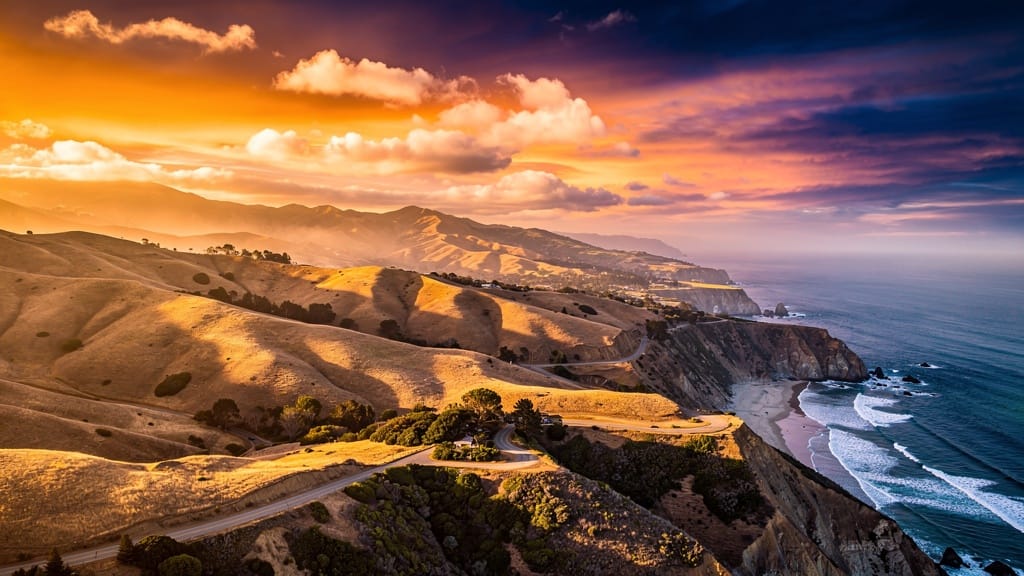
Yosemite
Valley views, waterfalls, El Capitan, Half Dome, and Mariposa Grove sequoias in the Sierra Nevada.
View guide →

Sequoia & Kings Canyon
General Sherman Tree, Giant Forest, deep canyons, and High Sierra wilderness.
View guide →

Death Valley
Badwater Basin, dunes, painted hills, and extreme desert beauty best visited in cooler months.
View guide →

Joshua Tree
Where two deserts meet — sculptural trees, boulder gardens, climbing, and night skies.
View guide →

Redwood
Cathedral groves of the world’s tallest trees along California’s misty northern coast.
View guide →

Channel Islands
California’s Galápagos — island trails, wildlife, sea caves, and offshore solitude.
View guide →

Pinnacles
Ancient volcano remnants, talus caves, condors, and Central California ridge hikes.
View guide →

All Nine Parks
California holds more national parks than any other state — plan one icon or a multi-park road trip.
Start planning →
Planning Your California National Parks Visit
Great park trips balance ambition with distance, elevation, weather, and reservations. Use these practical planning notes to turn inspiration into a workable California nature itinerary.
Pick a Region First
Group Yosemite with Sequoia/Kings Canyon, Joshua Tree with Southern California bases, Redwood with a northern coast road trip, and Channel Islands with a coastal departure city.
Watch the Seasons
Spring brings waterfalls and wildflowers; summer opens high country but adds crowds and heat; fall is calmer; winter favors deserts while Sierra roads may close.
Reservations & Entry
Check National Park Service pages for timed entry, campground bookings, wilderness permits, ferry reservations for Channel Islands, and current road status before you go.
Driving Realities
California parks are often hours apart. Build buffer days, avoid packing Yosemite and Death Valley into the same rushed weekend, and plan fuel stops in remote desert and north-coast stretches.
Safety Essentials
Carry water, sun protection, layers, and navigation. Respect heat, altitude, wildlife, ocean conditions, and steep trails. Cell service is unreliable in many park interiors.
How Long to Stay
One full day works for a highlight sampler; two to three days reveal a major park properly. Multi-park itineraries shine with a week or more and overnight stays near trailheads.
National Park Travel Essentials
These concise checks help domestic and international travelers prepare for California’s extraordinary range of park environments — from below-sea-level salt flats to 14,000-foot peaks and fog-bound coastal groves.
Best Overall Windows
March–May and September–November often balance milder weather and manageable crowds, with major regional exceptions for snow, heat, and ferry access.
What to Pack
Trail shoes, refillable water bottles, sun hat, warm layer, rain shell for the north coast, and binoculars for wildlife, condors, and El Capitan climbers.
Fees & Passes
Budget for park entrance fees or an America the Beautiful pass, plus separate costs for camping, shuttles, ferries, guided trips, and popular activity permits.
Where to Base
Stay in gateway towns when in-park lodging is full. Pair parks with San Francisco, Central Coast, Los Angeles, or Northern California routes already on your itinerary.
Outdoor Etiquette
Stay on durable surfaces, store food properly, give wildlife space, pack out trash, and leave rocks, plants, and historic objects undisturbed for the next visitor.
Before You Go
Confirm alerts for fire, smoke, storms, heat, road construction, and water conditions. Park landscapes change quickly across California’s microclimates.
Continue Exploring California
Use california.in to connect national park days with cities, beaches, road trips, and broader trip planning so your Golden State itinerary stays realistic from first booking to final trailhead.
Destination Guides
Browse San Francisco, Los Angeles, and other regional bases that pair well with park gateways and scenic drives.
Nature & Parks
Deepen your plan with national park landscapes, hiking ideas, mountains, deserts, redwoods, and outdoor safety guidance.
Coast & Beaches
Combine Sierra or desert park time with Pacific coastline stops, beach towns, and coastal highway scenery.
Planning Resources
Shape trip length, arrival airports, seasonal timing, and driving strategy around the parks you most want to see.
Road Trip Ideas
Link multiple parks across the Sierra, desert, redwood coast, and Central California when you have a week or longer.
Stay in the Know
Subscribe for seasonal park recommendations, practical planning advice, and new California travel inspiration.
Stay in the Know
Subscribe for new destination guides, seasonal national park recommendations, practical planning advice, and California travel inspiration.