
Fisherman’s Wharf
Classic sourdough bowls, Dungeness crab season, souvenir piers, and sea-lion-watching energy define this lively northern shoreline.
Waterfront favorite →
Spanning 49 breathtaking square miles on a dramatic peninsula between ocean and bay, San Francisco captivates visitors with iconic landmarks, rich history, world-class cuisine, and endlessly walkable neighborhoods.
Explore the GuideJump to the landmarks, neighborhoods, and planning advice that shape a smarter San Francisco itinerary.
Few cities in the world manage to pack the personality, the physical drama, and the cultural richness of San Francisco into such a compact and navigable space. This is a city that rewards the walker, dazzles the photographer, and delights the epicure.
San Francisco occupies the tip of a peninsula between the Pacific Ocean to the west and San Francisco Bay to the east. Its geography — 49 square miles sculpted by tectonic forces into dramatic hills, valleys, and waterfront coves — gives the city its instantly recognizable skyline and creates a thousand different vantage points from which the urban landscape unfolds like a living painting.
Established as a Spanish mission settlement in 1776 and transformed almost overnight by the Gold Rush of 1848–1855, San Francisco grew with frantic energy into the financial and cultural capital of the American West. The great earthquake and fire of 1906 destroyed much of the city, but it was rebuilt with remarkable speed and swagger. The mid-20th century brought the Beat Generation to North Beach, the counterculture revolution to Haight-Ashbury, and the LGBTQ+ rights movement to the Castro — each leaving indelible marks on the city’s identity that remain vivid today.
Today’s San Francisco is home to approximately 874,000 residents representing virtually every nationality, ethnicity, religion, and cultural tradition on Earth. It is simultaneously a booming tech hub — the northern anchor of Silicon Valley — and a city with one of the nation’s most robust arts communities. Its restaurant scene routinely garners more Michelin stars per capita than almost any other American city. Its public transit system, anchored by the famous cable cars, BART heavy rail, and Muni buses, makes it one of the most accessible and walkable cities in the country.
Visitors to San Francisco will quickly discover that the city rewards unhurried exploration. Yes, the Golden Gate Bridge and Alcatraz deserve their places on every itinerary. But the real magic of San Francisco reveals itself in smaller discoveries: a perfect croque-monsieur at a tiny café in the Tenderloin, a fog-drenched morning walk through Golden Gate Park, a conversation with a fisherman at the waterfront before the city wakes up. The city has a gift for surprise that few destinations can match.
When construction crews completed the Golden Gate Bridge on April 19, 1937, they had accomplished something widely considered to be impossible. The bridge stretches 1.7 miles across the Golden Gate Strait — the tumultuous channel connecting San Francisco Bay to the Pacific Ocean — and remained the longest suspension bridge in the world for 27 years after its completion.
Painted in International Orange (a color chosen over the U.S. Navy’s preferred yellow and black because it blended more naturally with the surrounding hills and water), the bridge rises 746 feet above the bay at its tallest towers. The roadway itself hangs 220 feet above the water — high enough to allow most ocean-going vessels to pass beneath.
The bridge’s chief engineer, Joseph Strauss, faced extraordinary challenges: powerful tidal currents, frequent fog, fierce winds, and the constant threat of seismic activity. His solution involved an innovative safety net suspended beneath the construction zone — an innovation in workplace safety that saved the lives of 19 workers who fell from the deck during construction.
Today, approximately 10 million people visit the Golden Gate Bridge each year, making it one of the most visited sites in the United States. The bridge is open to pedestrians and cyclists daily, offering views of the bay, the city, Marin County, and the Pacific Ocean that are genuinely unlike anything else in the world. The bridge looks different at every hour and in every weather condition — sharp against a pink-and-gold sunrise, or half-hidden in afternoon fog rolling through the strait.
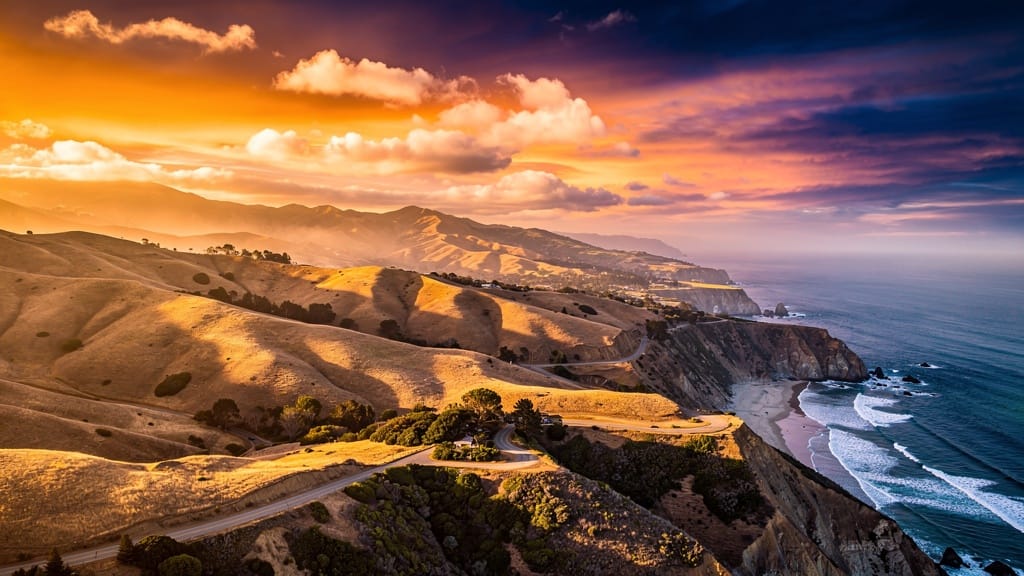
A short ferry ride from the Embarcadero delivers one of America’s most compelling historic sites — a former military fort, federal penitentiary, and living symbol of San Francisco Bay.
Alcatraz Island rises from the cold waters of San Francisco Bay about 1.25 miles offshore. Best known as the site of the infamous federal prison that operated from 1934 to 1963, “The Rock” once held some of the nation’s most notorious inmates — including Al Capone and Robert Stroud, the “Birdman of Alcatraz.”
Before it was a penitentiary, Alcatraz served as a Civil War-era military fortification and a military prison. After the federal prison closed, the island became the stage for a landmark Native American occupation from 1969 to 1971 that helped galvanize Indigenous rights activism across the country. Today the island is managed by the National Park Service as part of the Golden Gate National Recreation Area.
A visit typically includes the ferry crossing, the audio tour through the cellhouse, outdoor walks with sweeping skyline views, and time among the island’s gardens and historic structures. Tickets sell out regularly — especially in peak season — so reserve ferry departures well ahead of your travel dates.
San Francisco’s working waterfront mixes maritime history, seafood counters, street performers, bay breezes, and an easy launch point for ferries, cruises, and cable-car connections.
Classic sourdough bowls, Dungeness crab season, souvenir piers, and sea-lion-watching energy define this lively northern shoreline.

A broad bayfront boulevard for walking and biking, linking the Ferry Building, piers, public art, and skyline views across the water.

Local producers, oysters, coffee, cheese, and specialty foods make this historic terminal a delicious first stop on the waterfront.
Fisherman’s Wharf remains one of San Francisco’s most visited districts for good reason: it concentrates bay access, family attractions, seafood counters, and departure points for Alcatraz and bay cruises in a compact stretch of shoreline. Early mornings still carry traces of the working fishing fleet; later in the day the piers fill with visitors following the scent of clam chowder in sourdough bread bowls.
Continue along the Embarcadero for a more spacious waterfront promenade. The Ferry Building anchors the route with a celebrated marketplace and farmers’ market days, while the broad sidewalk invites unhurried walks with views toward the Bay Bridge, Treasure Island, and the city’s hilly skyline. Pair the waterfront with a cable-car connection or a slow wander into nearby North Beach for an easy half-day loop.
San Francisco’s cable cars are moving history — a National Historic Landmark you can actually ride over the city’s legendary hills.
Gripmen latch onto moving underground cables to haul cars up and over grades that would defeat ordinary streetcars — technology that has defined the city since the late 19th century.
The Powell-Hyde and Powell-Mason lines climb from Union Square toward the northern waterfront; the California line runs east–west through the Financial District and Chinatown corridor.
Expect lines at turnaround points in peak hours. Board mid-route when possible, hold on tightly on descents, and consider a Muni visitor passport if you plan multiple rides.
No other American city offers a transit experience quite like standing on the running board of a cable car as it crests a hill and the bay suddenly fills the horizon. The system is both a practical way to connect neighborhoods and one of San Francisco’s essential cultural experiences. Ride at least once in daylight for the views; if you can, catch a quieter morning car for a more local pace before the major stops grow crowded.
Larger than New York’s Central Park and every bit as essential to its city’s identity, Golden Gate Park stretches roughly three miles from the Haight-Ashbury edge toward the Pacific Ocean. Within its borders visitors find museums, gardens, lakes, meadows, bison paddocks, and enough quiet paths to make the surrounding city feel far away.
Highlights include the de Young Museum and the California Academy of Sciences around Music Concourse, the Japanese Tea Garden, the San Francisco Botanical Garden, Stow Lake boat rentals, and ocean-adjacent reaches near the beach. On weekends the park fills with walkers, cyclists, and picnic groups; weekday mornings often feel calmer and more contemplative.
Fog can pour through the park even when downtown is bright, so bring a layer. Pair a park morning with an afternoon in the nearby Inner Sunset or a walk toward Ocean Beach for a full west-side day that balances culture, greenery, and Pacific air.

A few local realities — hills, microclimates, transit, and reservations — make the difference between a smooth visit and a tiring one.
San Francisco’s microclimates are real. Foggy and cool near the ocean, clearer and warmer inland — often on the same afternoon. A light jacket earns its suitcase space every day.
The city is compact and rewarding on foot, but hills are steep. Combine walking with cable cars, Muni, BART, and rideshares rather than trying to cover every neighborhood entirely on foot.
Alcatraz ferries, popular restaurant reservations, and peak-season attractions sell out. Secure timed entries before you arrive, then leave room for spontaneous neighborhood wandering.
Comfortable shoes matter more here than in flatter cities. Build extra time between sights and use transit for long uphill jumps when energy runs low.
Driving and parking are often more stress than convenience inside the city. BART connects the airports and East Bay; Muni and cable cars handle many central routes well.
Balance bridge-and-wharf highlights with the Mission, North Beach, Chinatown, the Castro, and neighborhood cafés — where San Francisco’s character is often most vivid.
San Francisco is a year-round city, but season and fog patterns strongly shape outdoor plans, packing lists, and photo light.
Often the most reliable stretch for clearer skies and milder warmth after summer fog patterns ease. Excellent for walking, viewpoints, and waterfront days.
Spring brings fresh hillsides, comfortable touring weather on many days, and a strong balance of value and atmosphere before peak summer crowds fully arrive.
Popular with vacationers, but coastal fog and cool wind are common — especially near the Golden Gate and Ocean Beach. Pack layers even in midsummer.
Quieter museums, festive neighborhoods, and lower hotel demand on many dates. Expect rain chances and shorter daylight, with dramatic post-storm views.
Visit major sights early, reserve Alcatraz ahead, and save flexible neighborhood time for evenings when day-trippers thin out.
Choose shoulder seasons for weather-and-crowd balance; choose summer for maximum energy and open schedules if you accept cooler coastal air.
Neighborhood choice shapes your trip as much as hotel category. Stay central for first-time sightseeing, or base yourself where the city’s local rhythm matches your style.

Central for shopping, theaters, cable-car lines, and easy transit — a practical first-timer base with dense hotel options.
Ideal if bay views, family attractions, and short walks to piers and ferries matter more than nightlife or boutique shopping.
Classic grand-hotel territory with hilltop presence, historic character, and strong connections across the northern half of the city.
Choose these areas for restaurants, local cafés, and a more neighborhood-forward stay with quick rides to major sights.
San Francisco hotels range from landmark grande dames to compact boutique properties and practical airport-adjacent options. For most visitors on a first trip, staying near Union Square, Nob Hill, or the northern waterfront minimizes transit friction to the Golden Gate viewpoints, Alcatraz ferries, cable cars, and downtown museums. If cuisine and neighborhood atmosphere lead your priorities, consider the Mission, Hayes Valley, or other locally loved districts and use Muni, rideshares, or BART for the sightseeing spine.
Book early for fall weekends, holiday periods, and major city events. Compare total cost with parking — many central hotels charge high nightly garage rates — and confirm cancellation terms if fog-season plans may shift. Wherever you stay, a great San Francisco base is one that makes it easy to step outside and start walking.
Use San Francisco as a northern anchor, then connect the coast, parks, and southern cities with california.in’s destination guides.
Return to the full 2026 travel guide for cities, parks, beaches, road trips, wine country, and planning essentials.
Continue south for Hollywood, beaches, museums, neighborhoods, and a contrasting Southern California city rhythm.
Pair the city with Yosemite, sequoia groves, desert parks, and the wider outdoor map of the Golden State.
Subscribe for new destination guides, seasonal San Francisco tips, practical planning advice, and California travel inspiration.